
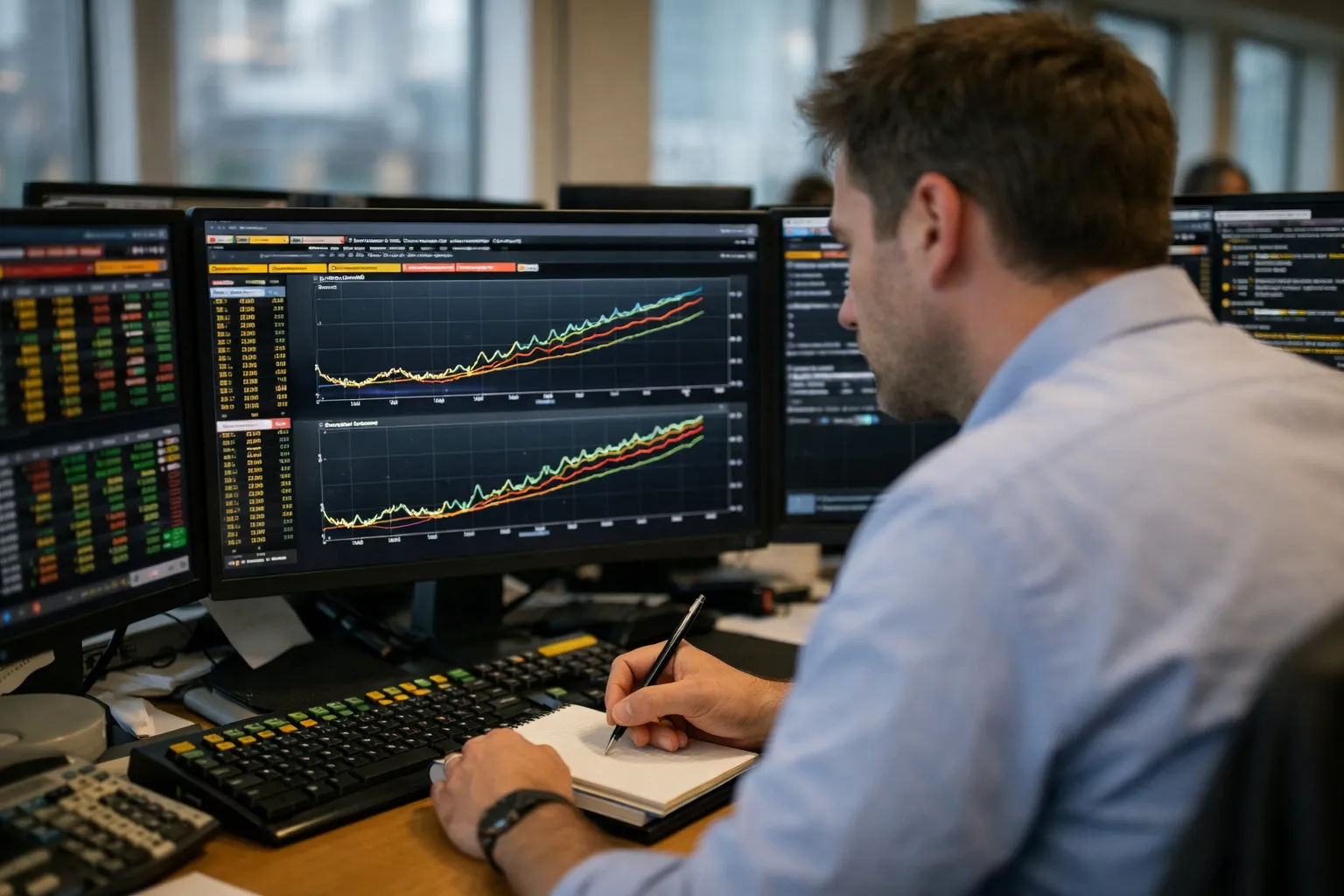
Overview
What we’re reviewing: Bloomberg Terminal’s commodity capabilities as of September 2026—real‑time pricing, curve analytics, OTC/physical-market coverage, news and research, programmatic access (APIs) and how these pieces work together for trading desks. Key specs at a glance:
- Primary functions: COMDTY pricing hub, Curve Builder, news & research integration, alerts, order-management / OMS links (where procured).
- Data coverage: exchange-traded futures & options, broker OTC screens, spot markets, deliverable notices, and third‑party physical-market feeds layered by users.
- Access: Desktop Terminal, Bloomberg Anywhere (remote), enterprise APIs (B‑Pipe/Enterprise Data Feed) and exported data connectors.
- Price range (industry reporting, Sept 2026): commonly cited between $24,000–$30,000/year per terminal; API and enterprise feed licensing quoted separately and scale with depth and history.
Background
Bloomberg LP remains one of the dominant providers of financial market data and workflow tools used by banks, hedge funds and commodity trading firms. For commodity desks the appeal is the same it has always been: breadth—prices, news and analytics in one interface—and the speed with which macro and market commentary become actionable.
As someone who learned to rely on a well‑stocked pantry, I still think of Bloomberg the same way: everything you need is usually within reach. That said, a chef still brings specialty knives for filleting—commodity traders increasingly layer specialist physical-data providers (vessel-tracking, satellite, cargo flows) on top of Bloomberg to get the same advantage.
Features Analysis
Below I inspect the Terminal’s commodity capabilities and where trading desks should focus their effort when deploying it.
Data breadth and depth
- Exchange coverage: Bloomberg continues to offer comprehensive coverage for major exchanges (CME Group, ICE, LME references, regional derivatives). Time-series and historical curves remain suitable for desk-level risk checks and many quant models.
- OTC & physical: Bloomberg aggregates broker screens and publishes physical-market reports where allowed, but the industry trend is clear—specialist physical feeds (Kpler, Vortexa, Kayrros and similar) are now standard complements for cargo and satellite intelligence. Expect to combine Bloomberg reference prices with these feeds for true physical visibility.
- Practical tip: build dedicated watchlists for deliverable notices and local tenders. If your alerts are broad, you’ll get flooded—narrow them by hub, counterparty and instrument type.
Analytics & workflow
- Curve building & modelling: Curve Builder and the Terminal’s analytics handle cross-commodity spreads, roll calculations and simple storage/backwardation scenarios. They’re powerful, but you should plan a structured training period—these tools are dense and teams underuse them without guided playbooks.
- Execution & OMS links: integrations with major OMS/EMS providers are available, but execution-sensitive desks must budget time with IT and vendor support to optimise routing and latency. Don’t assume plug-and-play.
- Programmatic access: B‑Pipe and Enterprise Data Feed remain the enterprise channels for tick and reference data. Expect enterprise negotiations and integration work: common outcomes in 2026 include multi‑year contracts with defined SLAs and connector support to cloud environments.
- Practical tip: don’t skip a sanity‑check stage—sample-comparisons between Bloomberg FX‑adjusted prices and your exchange feeds often reveal small timing or convention mismatches early, which are easy to fix if caught.
News, research & alerts
- Integrated news and research continue to be a differentiator—Bloomberg’s market commentary is tightly linked to tickers and alert triggers.
- Since 2024–25 more desks have been building composite alerts that combine price thresholds with ESG/carbon or satellite indicators. Configuring composite alerts well reduces noise; doing it poorly creates alert fatigue.
User experience
- Pros: consistent UI, fast search, robust keyboard shortcuts and reliable remote access via Bloomberg Anywhere.
- Cons: initial customisation, compliance configuration and building watchlists require time and often vendor support. New users benefit from a multi-week onboarding plan with small, measurable milestones.
Pros and Cons
- Pros
- Unrivalled breadth across instruments, exchanges and integrated news—helpful for macro-driven commodity desks.
- Single-source workflow for price discovery to basic execution, with enterprise support options and audit trails.
- Increasingly compatible with cloud deployment patterns and enterprise analytics stacks (subject to contract).
- Cons
- Significant per‑seat cost and separate charges for API/data feeds—total TCO can climb quickly for full enterprise coverage.
- Physical, regional and logistics intelligence still better sourced from specialists (cargo-flow, satellite, AIS)—you’ll usually need to license those on top.
- Steep learning curve; without structured training users underuse valuable features.
Pricing / Value
Public industry reporting in 2026 typically places a Bloomberg Terminal seat in the range of $24,000–$30,000 per year. That covers desktop access and Bloomberg Anywhere, but:
- Enterprise programmatic feeds (B‑Pipe/Enterprise Data Feed) are quoted separately and can add from tens of thousands to low‑seven‑figure sums annually depending on instruments, tick depth and historical windows.
- Integration (OMS links, professional services, compliance setup) often requires one‑time professional fees and internal IT resource allocation.
Value judgment: for mid‑to‑large commodity desks that need integrated market data, real‑time news and compliance-ready audit trails, Bloomberg often justifies the cost. Smaller, specialist shops should evaluate a leaner terminal plus specialist feeds (cargo-flow, satellite, regional desks) to maximise ROI.
Who It’s For
- Institutional commodity desks that require one‑stop coverage (derivatives, macro news, basic physical intelligence) and need audit capabilities for compliance.
- Macro traders and risk managers who value fast news-to-trade workflows and cross‑asset analytics.
- Boutique physical-trade firms that need granular logistics or vessel-level transparency should expect to layer specialist providers on top of Bloomberg; it’s rarely a standalone solution for deep physical intelligence.
Alternatives
- LSEG Workspace (Refinitiv) — comparable breadth; often priced lower depending on modules and popular as a Bloomberg alternative for research desks.
- Kpler / Vortexa / Kayrros — specialist cargo-flow, AIS/vessel-tracking and satellite-derived inventory intelligence; use these when physical logistics drive risk.
- CQG, ICE/Trayport — execution- and market-access-focused platforms that may suit execution‑centric shops better than a generalist terminal.
Verdict
Bloomberg Terminal remains a defensible core platform for commodity desks in September 2026: breadth of instruments, tightly integrated news and enterprise-grade support keep it central to many trading workflows. The practical reality today is hybrid: desks commonly run Bloomberg for price discovery, analytics and compliance while licensing specialist physical-data providers for cargo, satellite and regional pricing intelligence.
Recommendation: if you need end‑to‑end market coverage and can justify seat costs, Bloomberg is worth it. If your needs are narrowly focused—cargo flows, vessel-tracking, or ultra‑cheap historical tick datasets—build a lean Bloomberg (or LSEG) setup and add specialist feeds targeted to the gaps. And above all, plan onboarding and a sanity‑check period—new integrations look seamless until they don’t.
FAQ
Is Bloomberg necessary for a small commodity trading shop?
Not always. Many small shops get better ROI with a lower-cost terminal (or LSEG Workspace) plus targeted specialist feeds (cargo-flow, AIS, satellite) and direct exchange data for execution. Map your requirements—if macro news and cross-asset analytics aren’t central, consider a leaner stack.
How much will APIs and data feeds add to the cost?
APIs and enterprise feeds are typically licensed separately and can add anywhere from tens of thousands to low‑seven‑figure amounts annually depending on tick depth, instruments and historical windows. Get a scoped quote and include integration costs in your internal budget.
Should I pair Bloomberg with a cargo- or satellite-data provider?
Yes. For oil, LNG, bulk commodities and supply‑chain risk, pairing Bloomberg’s market data and news with a cargo-flow or satellite provider (Kpler, Vortexa, Kayrros or similar) materially improves visibility into physical flows and short-term supply shocks.
How can I reduce alert fatigue on the Terminal?
Use composite alerts (price + hub + counterparty) and test them during low‑volatility windows. Create desk‑specific watchlists and schedule periodic reviews to retire noisy rules. A small governance group per desk helps keep alerts actionable.
What’s the quickest practical step to get value from Bloomberg today?
Start with a two-week onboarding plan: set up hub- and counterparty-specific watchlists, run a five‑day API sanity check against exchange prints, and schedule training sessions that map Terminal functions to actual desk workflows (trade entry, P&L checks, compliance). That approach pays back fast.